
Slant Bed vs Flat Bed CNC Lathe: Engineering Selection Guide for Batch Turning & Rigidity
Senior Machine Tool Design Group • 2025-02-15 • 7 min read
Índice de Contenido (6)
Introduction: The Fundamental Architectural Choice #
When configuring a modern CNC turning department, manufacturing engineers and plant managers inevitably confront a primary question: Should you invest in a true 45° Slant Bed CNC Lathe (such as our TCK series) or a robust Flat Bed CNC Lathe (such as our CK series)?
While both machines share the foundational mechanics of turning rotational parts with single-point cutting inserts, their underlying bed geometries generate stark contrasts in production dynamics, chip clearance, thermal stability, and capital ROI.
1. Structural Rigidity and Cutting Force Vectoring #
The most critical distinction lies in how the machine frame absorbs cutting forces:
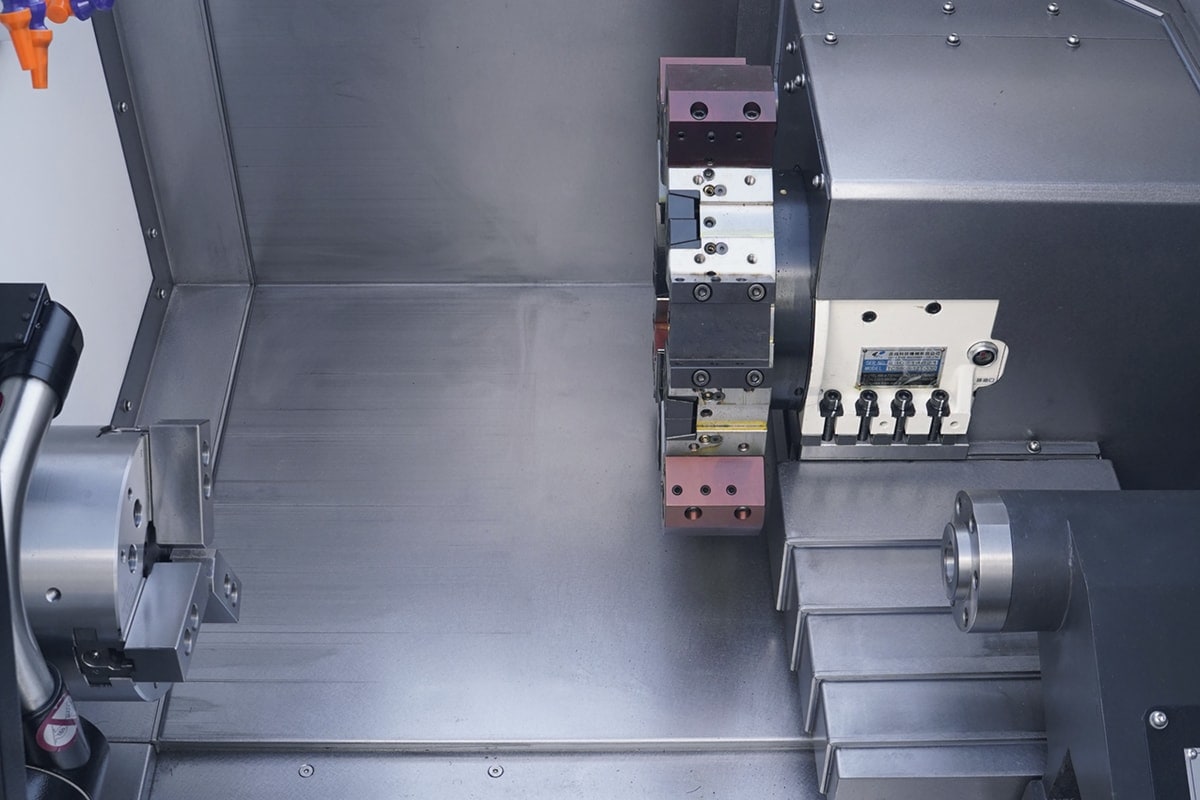
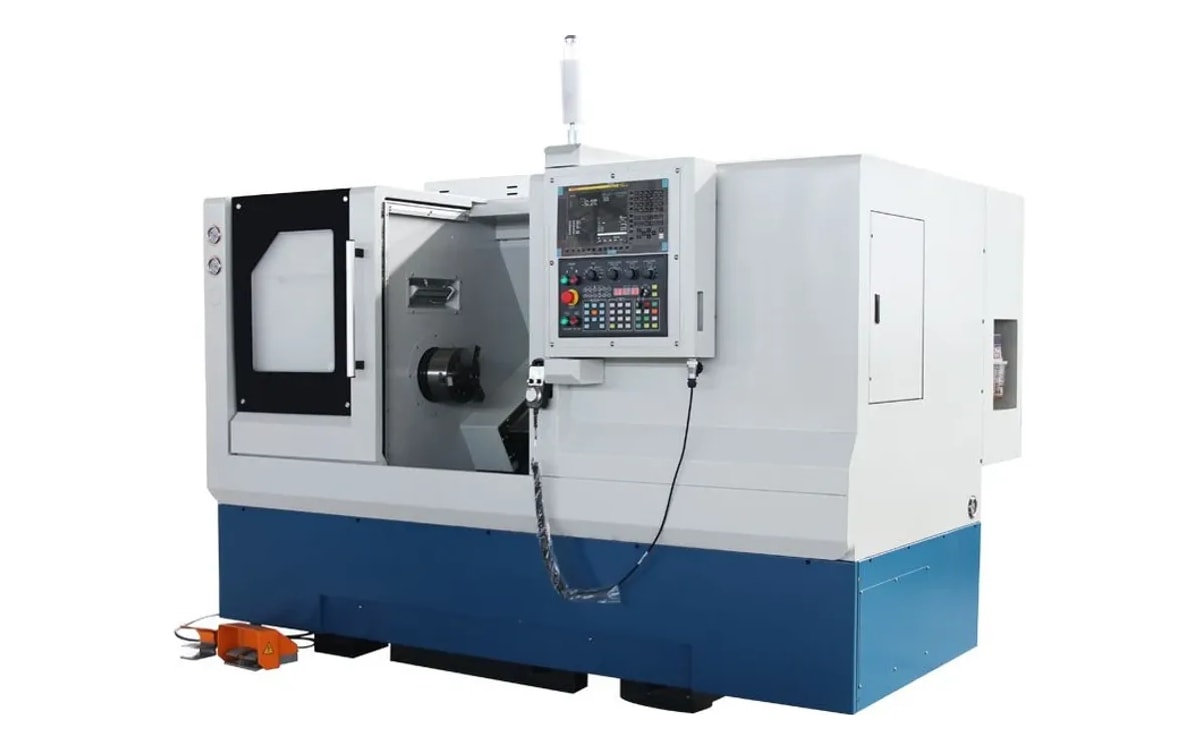
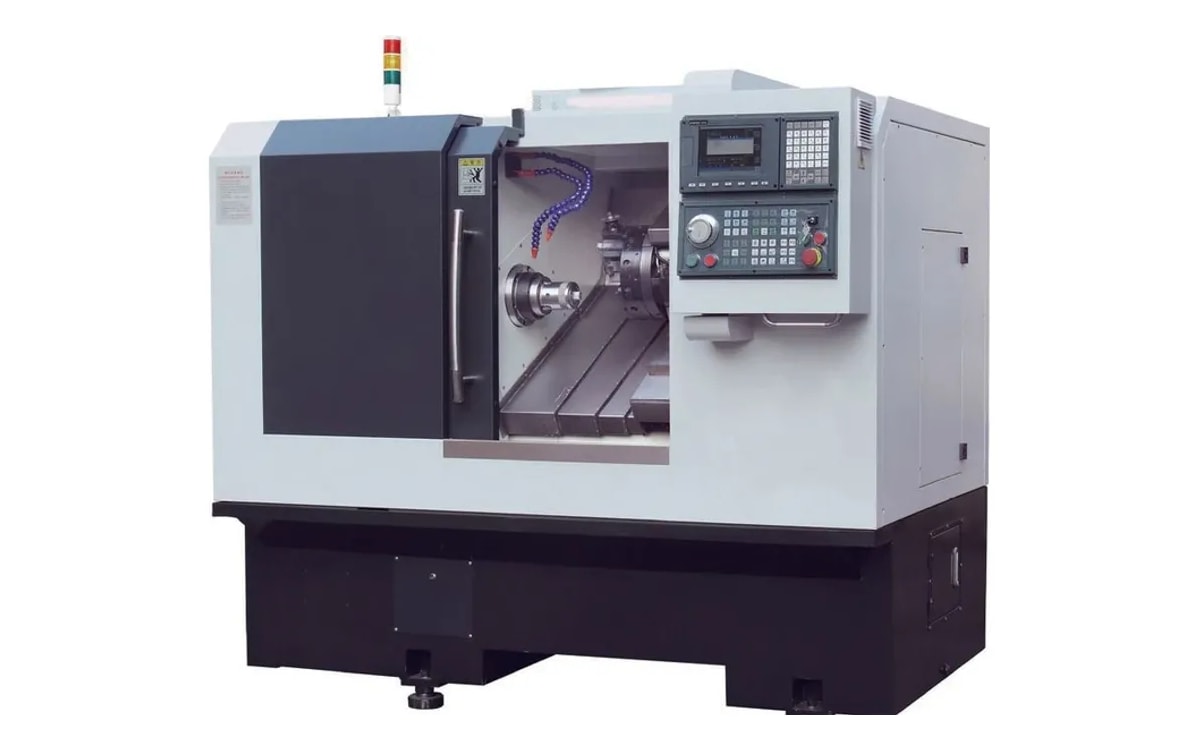
- 45° Slant Bed Lathes (TCK50, TCK52, TCK56): In a slant bed configuration, the guide rails are tilted at 30° to 45° along the horizontal plane. When a cutting tool engages the workpiece, the resulting cutting force vector pushes directly perpendicular into the monolithic cast iron bed. This aligns the cutting force with the bed's maximum cross-sectional modulus, virtually eliminating carriage lifting moments. Consequently, slant bed lathes can take heavier depth-of-cut passes at higher surface feet per minute (SFM) without tool chatter.
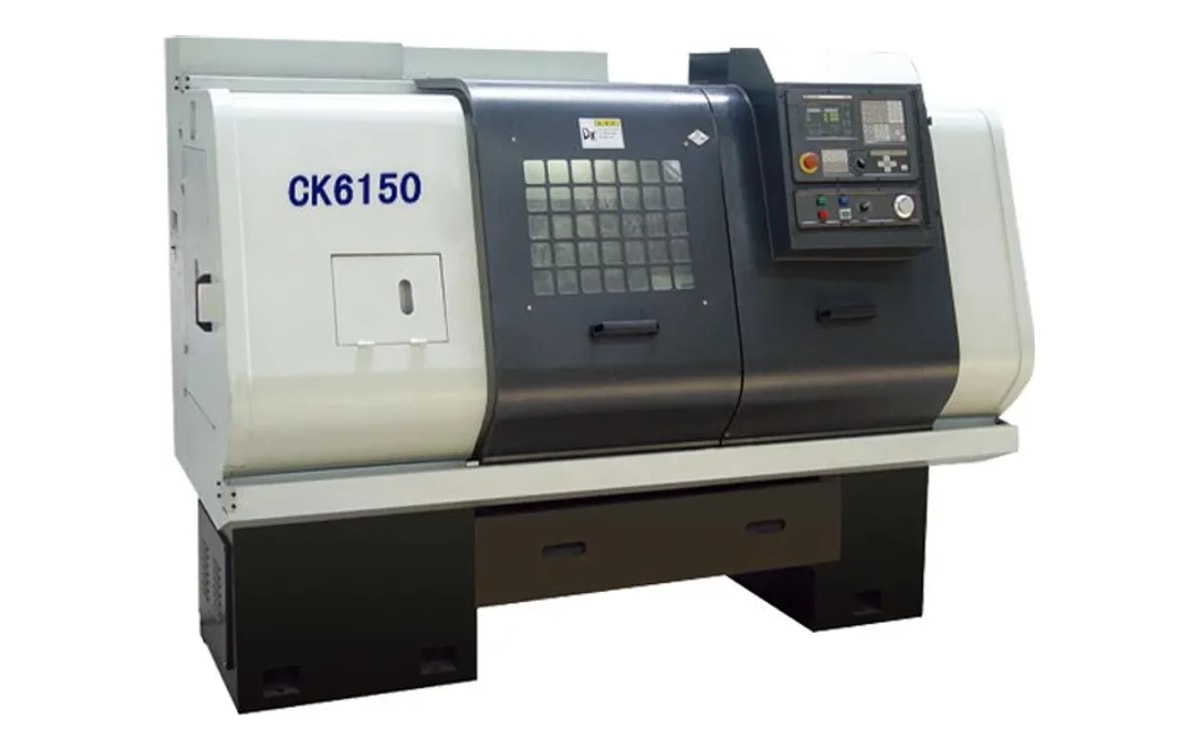
- Flat Bed Lathes (CK6140, CK6150, CK6160): In a conventional flat bed lathe, the carriage rides horizontally on parallel bedways. Heavy cutting forces create an upward rotational moment on the rear guideway clamp, which relies on the gib strip tension to resist vibration. While flat bed lathes excel in supporting massive, heavyweight workpieces where downward gravity is paramount, high-feed continuous roughing will exhibit higher harmonic vibration than a slant bed design.
2. Gravity-Assisted Chip Evacuation and Thermal Equilibrium #
For automated, high-volume production, hot chips are not just debris—they are the number one source of thermal distortion.
- Immediate Chip Shedding: On a 45° slant bed, chips drop naturally away from the cutting zone under gravity into an integrated chain conveyor beneath the bed. Hot metal swarf never accumulates on the guideways or ballscrews.
- Thermal Stability: In contrast, on a flat bed lathe, chips inevitably land on the horizontal slide covers and apron. If not constantly swept away by manual or high-flow coolant, these 300°C–600°C chips transfer thermal energy directly into the bed casting, causing gradual axial drift (Z-axis thermal growth) throughout an 8-hour shift.
3. Cycle Time, Toolpost Indexing & Automation #
- Slant Bed (TCK Series): Standardly equipped with high-speed hydraulic or servo indexing turrets (0.2-second station-to-station indexing) with 8 to 12 positions. Furthermore, the slant design provides generous clearance for automatic bar feeders, parts catchers, and gantry pick-and-place robots.
- Flat Bed (CK Series): Typically paired with a 4-station vertical electric toolpost or 6-station horizontal turret. Tool indexing takes 2.0 to 4.5 seconds per station. Flat bed lathes are fundamentally designed for manual loading of varied shafts and short-batch runs rather than rapid unmanned lights-out manufacturing.
4. Summary Matrix: Which Machine Fits Your Production? #
| Evaluation Parameter | Slant Bed CNC Lathe (TCK Series) | Flat Bed CNC Lathe (CK Series) |
|---|---|---|
| Typical Application | High-volume batch production, tight tolerance turning | Job-shop maintenance, prototyping, large shaft turning |
| Bed Geometry | 45° Monolithic Meehanite Slant Bed | Horizontal Meehanite Induction Hardened Bedways |
| Tool Changer Speed | 0.2 – 0.4 sec (12-Station Servo Turret) | 2.0 – 4.0 sec (4-Station Electric Toolpost) |
| Max Spindle Speed | Up to 4,000 RPM (Cartridge spindle) | Up to 1,600 – 2,500 RPM (Geared headstock) |
| Chip Evacuation | Automatic direct-fall into chain conveyor | Requires frequent coolant washing / manual cleaning |
| Bar Feeder Integration | Seamless plug-and-play | Limited compatibility |
| Initial Investment | Higher capital expense | Highly economical capital expense |
Conclusion & Recommendation #
If your facility manufactures automotive components, hydraulic couplings, threaded fasteners, or precision shafts in batches exceeding 500 pieces, the HT Precision TCK50 or TCK52 provides dramatic productivity gains that recoup capital costs within 8 to 14 months.
Conversely, if you run a repair facility, general machinery shop, or turn large diameter rollers (Ø400mm+) with frequent setup changes and lower batch volumes, the HT Precision CK6150 or CK6160 provides unbeatable flexibility, substantial spindle bore clearance, and lower initial capital outlay.
HT Precision Engineering Team
Specialized in high-rigidity CNC machining centers, slant bed turning solutions, and sub-micron laser pitch calibration protocols.
Modelos Mencionados en esta Guía
 TCK Series
 TCK50
Meehanite FC-30High-Rigidity 45° Slant Bed CNC Lathe for Mass Production Turning
 TCK Series
 TCK52
Meehanite FC-30Versatile Slant Bed CNC Lathe with Enhanced Turning Diameter & Rigidity
¿Necesita Asesoría para su Pieza de Trabajo?
Envíe sus planos CAD a nuestros ingenieros para una estimación gratuita de tiempos de ciclo y selección de herramientas.
Solicitud de Cotización Directa
Cotización directa de fabricante, asesoría en herramental y planos de implantación CAD 3D en menos de 12 horas.
RFQ Received Successfully
¡Gracias! Hemos recibido su solicitud técnica. Nuestro equipo de ingeniería le enviará una propuesta completa en menos de 12 horas.
Submission Notice
Hubo un error al enviar el formulario. Por favor contáctenos directamente en xiuc32860@gmail.com.